
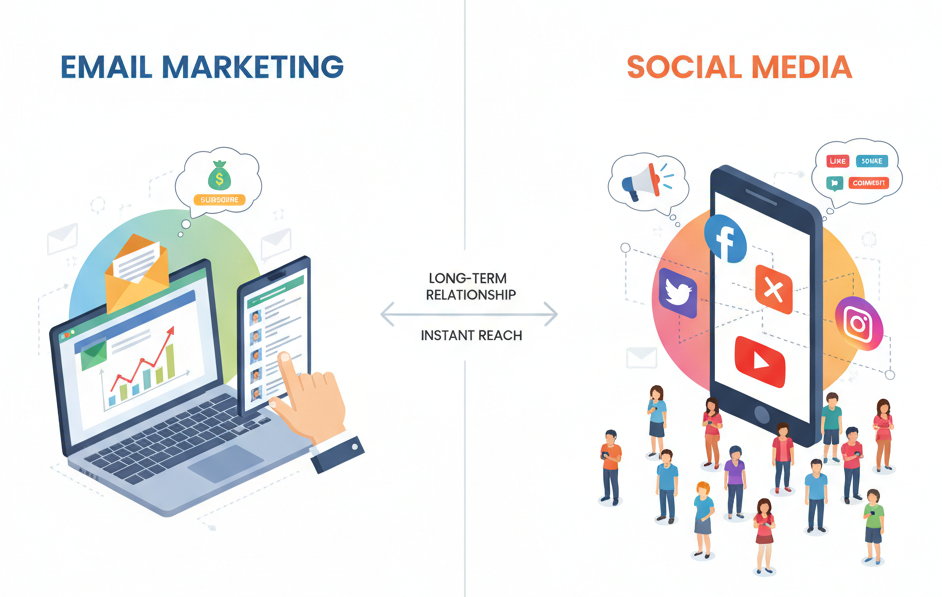
Affiliate marketers know how important traffic and engagement are. Email marketing and social media both offer big opportunities, but they work in pretty different ways. With so much hype around every new platform, it can be tough to figure out what delivers the best results for affiliate promotions. I’ve used both approaches in my campaigns, and both have wins and losses.
Email marketing gives direct access to a list of subscribers who have opted in, while social media campaigns try to catch attention in busy feeds. If you’re considering where to put your time, money, or creative energy, this guide will break down what makes each approach tick so you can make choices that match how you want to grow as an affiliate marketer.
Email Marketing vs Social Media: The Basics
Email Marketing Explained
Email marketing means sending offers, updates, or value-packed content directly to subscribers’ inboxes. To get started, you’ll need an email service like MailerLite, ConvertKit, or AWeber. People have to opt in (usually with a lead magnet, like a freebie), so you always have permission to send. That helps build trust over time, which is really important for affiliate promos.
Beneficial features for email marketing:
- Direct communication. People are more likely to see and act on your messages.
- Segmentation lets you tailor messages based on what subscribers actually want.
- Email marketing often delivers higher conversion rates compared to broad, less personalized social posts.
Social Media for Affiliates
Social media marketing means sharing posts, stories, reels, or ads on platforms like Facebook, Instagram, X (Twitter), TikTok, or Pinterest. The main advantage is reach. Your message can get in front of a ton of people, fast. Social content can go viral and bring in new visitors to your site or affiliate offers you’d never reach otherwise.
Beneficial features for social media marketing:
- Potential to grow an audience quickly. Content can reach people beyond your direct followers.
- Good for real-time engagement, like answering questions and building conversations around your niche.
- Visual content (images, videos, and infographics) works best for affiliate product demos or quick tips.
Both email and social media have their decent place in marketing, but understanding their unique roles will smooth the way as you game plan your affiliate marketing strategies.
Who Should Use Email Marketing?
Email marketing is ideal for affiliate marketers who want to build long-term, loyal relationships with their audience. It’s especially effective for creators who offer exclusive deals, in-depth product reviews, or high-ticket affiliate offers that require more explanation and trust-building. This channel also works well for anyone who prefers direct, measurable communication rather than competing with the constant noise of social media feeds. If you value control, personalization, and strong audience retention, email marketing is the way to go.
Who Should Focus on Social Media?
Social media is the perfect choice for affiliates who work with visually driven products—such as fashion, fitness, beauty, or trendy gadgets—and those who excel at creating viral, scroll-stopping content. It’s an excellent platform for anyone looking to build brand awareness and grow an audience from scratch, especially if they’re willing to show personality and creativity. Social media also caters to marketers who enjoy real-time engagement, hopping onto trends, and sparking quick conversations within their niche.
Pros & Cons of Email Marketing
Like everything else, there are some pros and cons to email marketing:
Pros:
- Gives you direct control over your audience. no algorithm surprises.
- High open and click rates with a warm list (people who want to hear from you).
- Easy to track performance (who opened, who clicked, what method worked).
- Good for sending longer-form content, product launches, and nurture sequences.
Cons:
- Building a quality email list takes time and effort.
- Deliverability can be tricky; some emails end up in spam if you aren’t careful.
- Email platforms charge more as your subscriber list grows.
Pros & Cons of Social Media
Social media has some pros and cons to be aware of:
Pros:
- Fast audience growth with the right content or paid ads.
- Instant feedback and conversation with followers.
- Great for brand building and showing personality.
- Access to analytic tools on every major platform.
Cons:
- Organic reach is unpredictable. Algorithm changes can cut traffic overnight.
- Platforms own your audience (no direct contact if your account is banned or throttled).
- Affiliate links in posts may be limited or flagged, depending on the platform.
- It’s harder to convert strangers who see your posts to buyers compared to a warm email list.
Key Comparisons for Affiliate Marketers
Notice that there are some key comparisons for affiliate marketers.
- Targeting & Personalization: With email marketing, you can create very specific segments. For example, I can send a tech product offer only to people who have clicked on similar tech topics in the past. Social media has some targeting, especially with ads, but organic posts get shown to whoever the algorithm decides.
- Conversion Rates: I see much higher conversions from emails compared to social posts. Email lists are made up of people who have already shown they want updates from me. Social clicks are nice, but they’re often from people just browsing.
- Longevity & Control: If a social media platform disappears or changes its rules, there goes your audience. That’s a real risk if you depend only on social. Email subscribers stick around as long as you keep giving them value.
- Cost & Time: Social media is free to start but often needs paid ads or lots of time to get real results. Building an email list may cost money for software, but each new subscriber increases your potential earnings for every email you send, possibly for years.
- Trust Factor: Emails feel more personal and private, and that’s important if you’re asking someone to buy from an affiliate link. Social media is louder and less personal, so building trust can take longer.
Reputation Among Affiliate Marketers
- Email Marketing: Most experienced affiliates swear by email for driving sales, especially for launches and evergreen offers. There are whole businesses run with nothing but a quality email list!
- Social Media: Many affiliates use social media to build interest or grow their list, but they often move followers onto an email list as a next step. Social is great for buzz, but not always for consistent sales.
Overall Reputation: Email is often called the “bread and butter” channel for affiliates, but smart marketers usually mix in both strategies for the best results.
Email Marketing or Social Media: Which Should You Choose?
For most affiliate marketers, email marketing is more reliable for sales and long-term business growth. The direct, private connection just works better for pitching offers and building loyalty. Social media is super useful for driving awareness, building your brand, and getting that top-of-funnel traffic. I use both: social to grow my list and keep my brand active, and email to convert those followers into buyers.
- Focus on email marketing if:
- You want more consistent affiliate commissions and better tracking of what works.
- You care about building an audience that’s always accessible, even if you lose access to your social accounts.
- You enjoy creating content that educates, reviews, or adds value over time.
- Focus on social media if:
- Viral posts and quick brand growth are priorities for you.
- Your niche is heavily visual (think makeup, gadgets, and fitness).
- You have time or funds for creating new content regularly and engaging with your audience directly.
For affiliate marketers, email and social media each offer unique upsides. The most successful campaigns usually combine both: capture interested followers on social media, then build trust and drive sales with email. That mix keeps your affiliate marketing steady, flexible, and ready for anything online platforms throw your way.
Conclusion
Email marketing and social media both play powerful roles in an affiliate marketer’s toolbox, but they shine in different ways. Email provides stability, control, and higher conversions, making it a long-term asset that grows with your business. Social media, on the other hand, helps you expand your reach, build brand awareness, and attract fresh eyes to your content and offers. The smartest affiliate marketers don’t treat them as competitors—they use them together. Grow your audience and spark engagement with social media, then guide those followers onto your email list where you can build trust, deliver value, and convert more reliably. Whether you lean more toward email, social, or a balanced mix, the key is choosing the strategy that aligns with your niche, your strengths, and the way you love to connect with your audience.